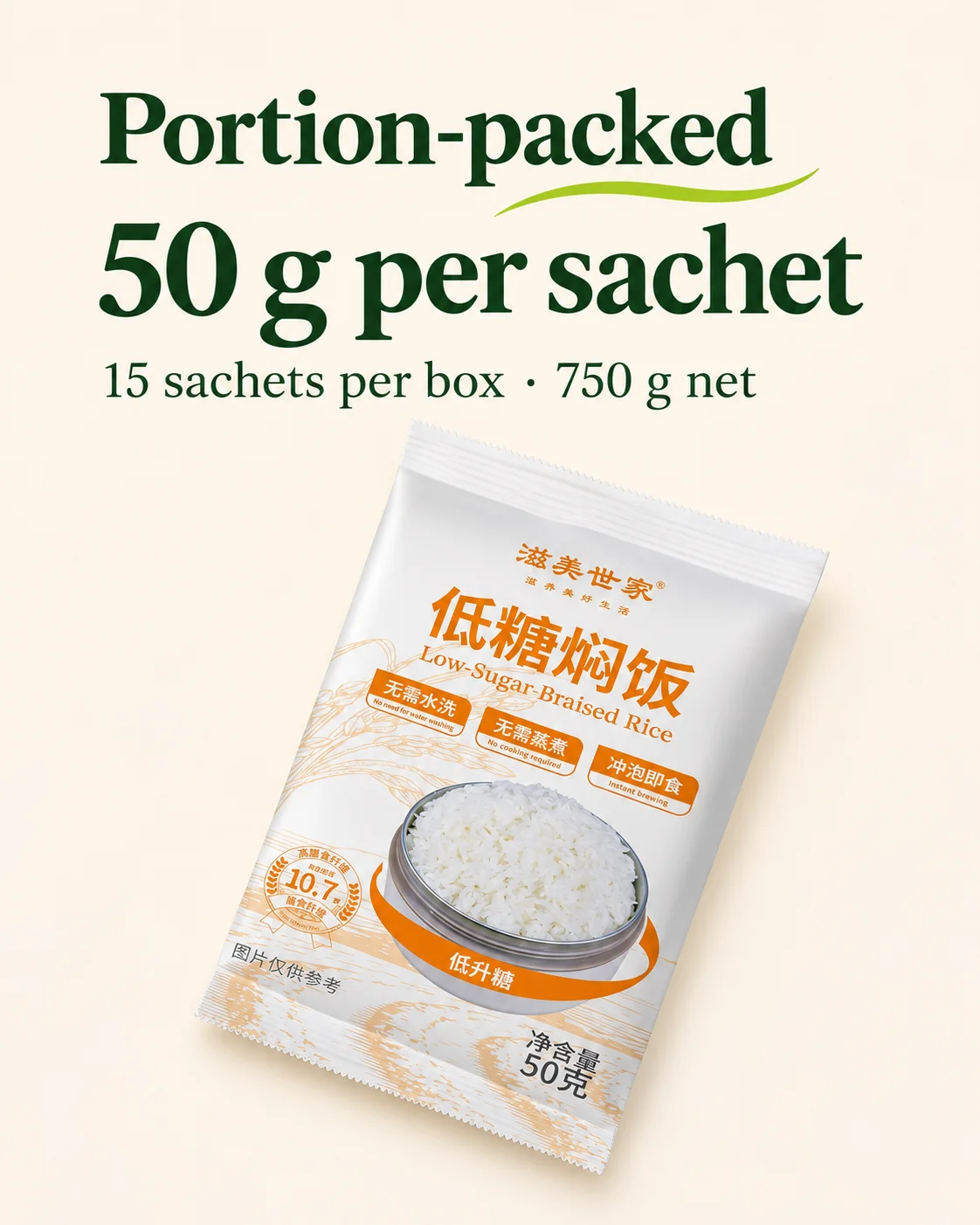
1. Start with the product format
The WellNavo format is dry rice in individually sealed 50 g sachets, with 15 sachets in a 750 g box. It requires boiling water, stirring and 10–15 minutes covered before eating. A moist rice pouch that only needs reheating has a different preparation process. Match the format to the facilities and time available where customers will use it.
2. Match the pack to the channel
Retailers may assess the outer box, shelf information and ease of explaining the sachets. Foodservice buyers should also assess handling: opening many small sachets may be less practical for a kitchen preparing large batches. Review the existing format before requesting a different pack or a custom project.
3. Compare weights on the same basis
The stated 50 g is the dry food’s net weight, and 15 × 50 g equals 750 g net per box. It is not a measured prepared yield or a personalised serving recommendation. Compare dry product with dry product, and distinguish food net weight from the packed shipment’s gross and chargeable weights when reviewing delivered cost.
4. Review a consistent document set
Use one selected SKU as the reference for the ingredient list, nutrition panel, preparation instructions, shelf-life information and relevant reports. Check the sample identity, dates and scope of each report. If the recipe, label or pack changes, confirm which documents still apply. Keep proposed artwork separate from the final approved pack.
5. Plan a practical preparation review
For a sample review, follow the supplied instructions and record the water method, covered waiting time and observations of the finished texture. A labelled illustration can explain the steps; an actual preparation trial provides different information. Decide whether the format suits a household, an office with boiling water, or your foodservice workflow.
6. Separate brand and delivery decisions
Discuss supplier-brand supply, a WellNavo-branded route, or a customer private-label project. Confirm artwork responsibility, minimum quantity, lead time and destination requirements for the chosen route. Assess freight and taxes against the actual destination, shipment and importer arrangement; a product-only price is not a delivered quotation.
Keep an evidence-based sample record
Use the sample-review worksheet to record the selected SKU, preparation conditions, texture observations and unresolved buying questions. Leave results blank until you have tested the sample. The worksheet separates product facts from your own trial observations and helps your team decide whether to proceed, request changes or stop.